Blanching
Hot water bath
63–65 °C · 2–3 minOur story
Step inside our vanilla polyhouse in Kerala. Then explore, at your own pace, how every bean is grown, pollinated and cured.
Explore how we grow ↓The farm film
Jump to any chapter below, or switch off the narration.
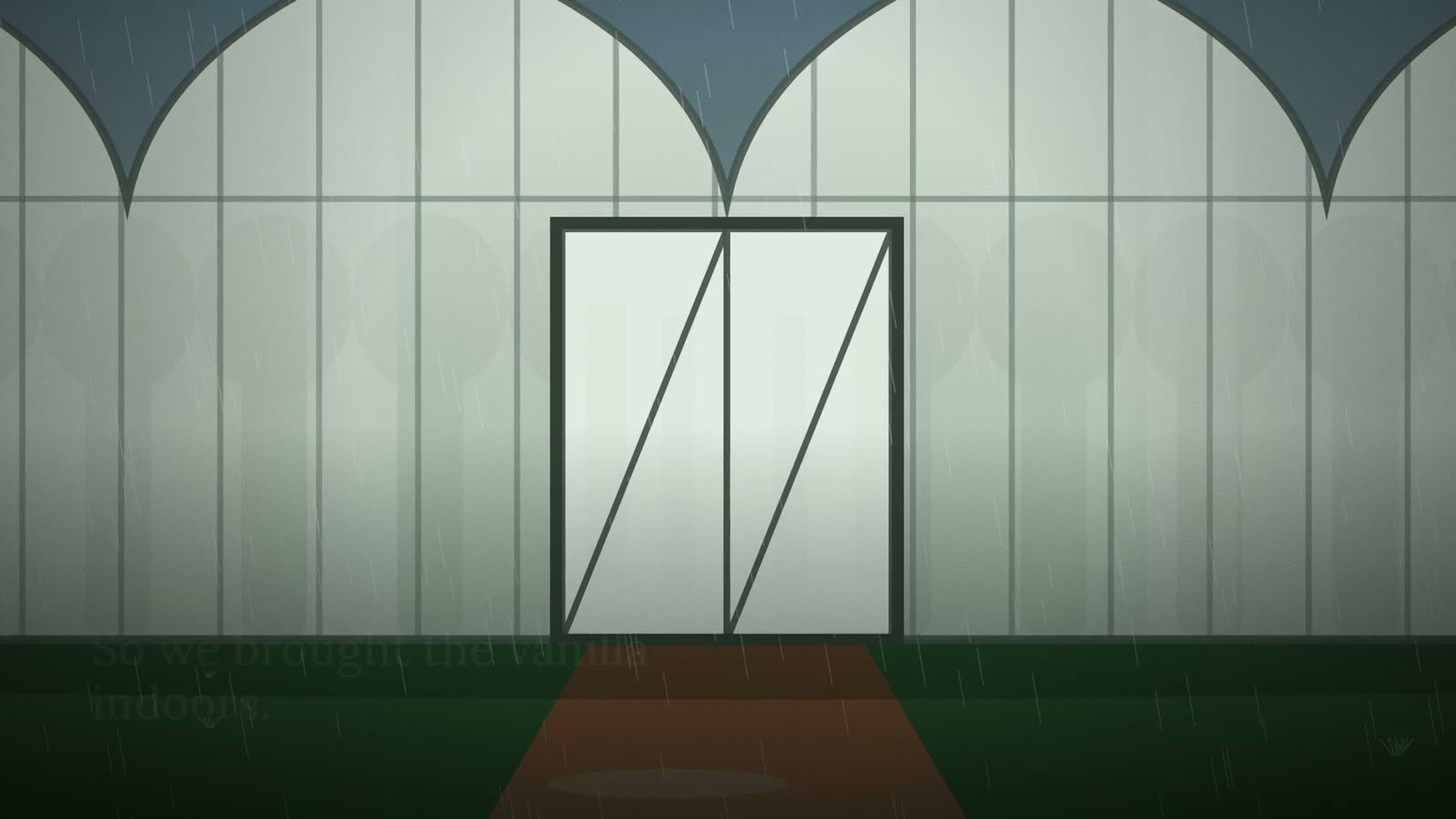
Kerala, India
Heavy rain, high humidity and waterlogged soil make open-field vanilla a gamble. So we brought the vanilla indoors.
Controlled environment
Towers and raised beds line the aisle. Fogging, airflow and grow lights hold the house steady through the rains, and sensors watch every bed.
80%
Relative humidity
27°C
Air temperature
62%
Substrate moisture
6.2
Nutrient pH
All systems holding the house steady.
Root zone
Drip fertigation doses each stage of growth. Water stored underground stays cooler than a tank in the sun.
Substrate mix
Tap a layer of the mix to learn what it does.
Soilless bed · 0.9 × 0.45 × 0.30 m · plants 0.30 m apart
Irrigation water
Exposed tank
Heats up in the sunBuried tank
Soil around it acts as a thermal bufferBelow-ground water storage keeps irrigation water cool for the roots.
Density
Raised beds and vertical towers let aerial roots feed from the substrate, so plants stack upward instead of spreading out.
Vertical tower2.5 m · 6 plants1.8 m around
Try it: plants on your land
Up to 3× more plants on the same ground.
Estimate based on 1–2 plants/m² in open field vs 5–6 plants/m² in this system.
Pollination
No natural pollinator works here, so every flower is hand-pollinated on the morning it opens.
Press and hold the flower to pollinate it yourself.
Pollinated. In time, this flower becomes a long green pod.
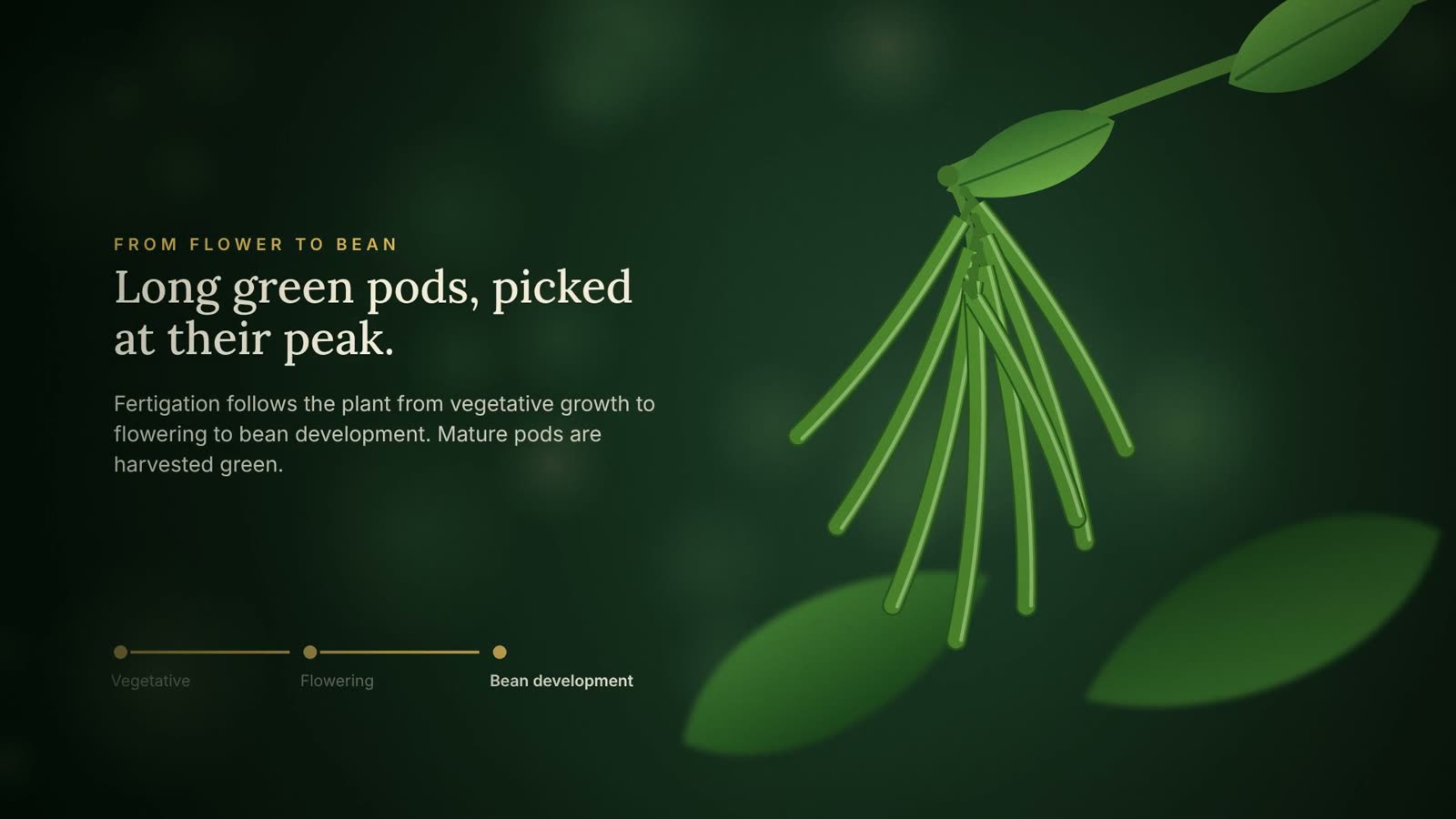
From flower to bean
Fertigation follows the plant from vegetative growth to flowering to bean development. Mature pods are harvested green.
The vine climbs and roots. Fertigation is tuned for strong leaf and root growth.
Curing
Over four slow stages, glucovanillin inside the pod turns into vanillin. Drag the bean through the cure.
Hot water bath
63–65 °C · 2–3 minWrapped warm in cloth
45–55 °C · 7–10 daysSun and shade cycles
2–6 weeks · 80% → 25–30% moistureRested in closed wooden boxes
Weeks to monthsTarget vanillin content
0.0%+
A Frontline Demonstration project under MIDH Kerala (Mission for Integrated Development of Horticulture).